Saturday, August 28, 2010

Tata Huda's Great Adventures

Today was the last day of Tata Huda’s traveling permit, and the most important because of the Christian holiday. We woke up really early and were out the door within a few minutes, on our way to Jerusalem. On the way, however, we had to stop at the separation wall to go through the checkpoint. I’ve gone through the security maze by myself before, but this time it was even longer and more complicated, and Tata Huda was with me. Tata is about 80 years old (but no one is really sure because her birth certificate says 00/00) and she has several kinds of cancer, most noticeably in her lungs- you can tell by her cough. She is a loving, friendly elderly woman, and when people visit the house she swells up with pride when she talks about me. Each day as I learn more Arabic our communication becomes better and better (she doesn’t speak any English). She can’t stand, let alone walk, for very long, because her body is becoming increasingly weaker each day; furthermore, she doesn’t even know she is sick, and the last time she got home from the doctor’s office in Ramallah she happily announced that she is actually getting better. As her caretaker, Jiries figures she will be happier this way.


The entrance to the security labyrinth against the wall:

We arrived at the separation wall, and Tata Huda and I got out of the car to go through security while Jiries drove through. After he drove away, we paused for a second to let a group of men go ahead of us, and glancing at the long incline ahead Tata Huda turned to me, sighed, and said “Yalla” (let’s go).


I asked her if she needed help, but she said no, so I walked a couple feet ahead of Tata so I could take lots of pictures. Generally going through checkpoints, no matter who I am in the car with, I refrain from taking pictures because it makes everyone else uncomfortable since they don’t want to upset the Israeli military. There are always soldiers in the watchtowers, looking at everything you do, and I know for a fact they don’t like cameras. I don’t have any interest in testing them, but there was no way I was going to miss an opportunity to document the tedious and degrading procedure that Tata Huda was forced to go through. For me, it’s no big deal; since I am young, walking through the security station is effortless, and all I have to do is flash my American passport and I am on my way through any turnstile or metal detector. For Tata Huda, on the other hand, it’s not easy since she is elderly, sick, and Palestinian.


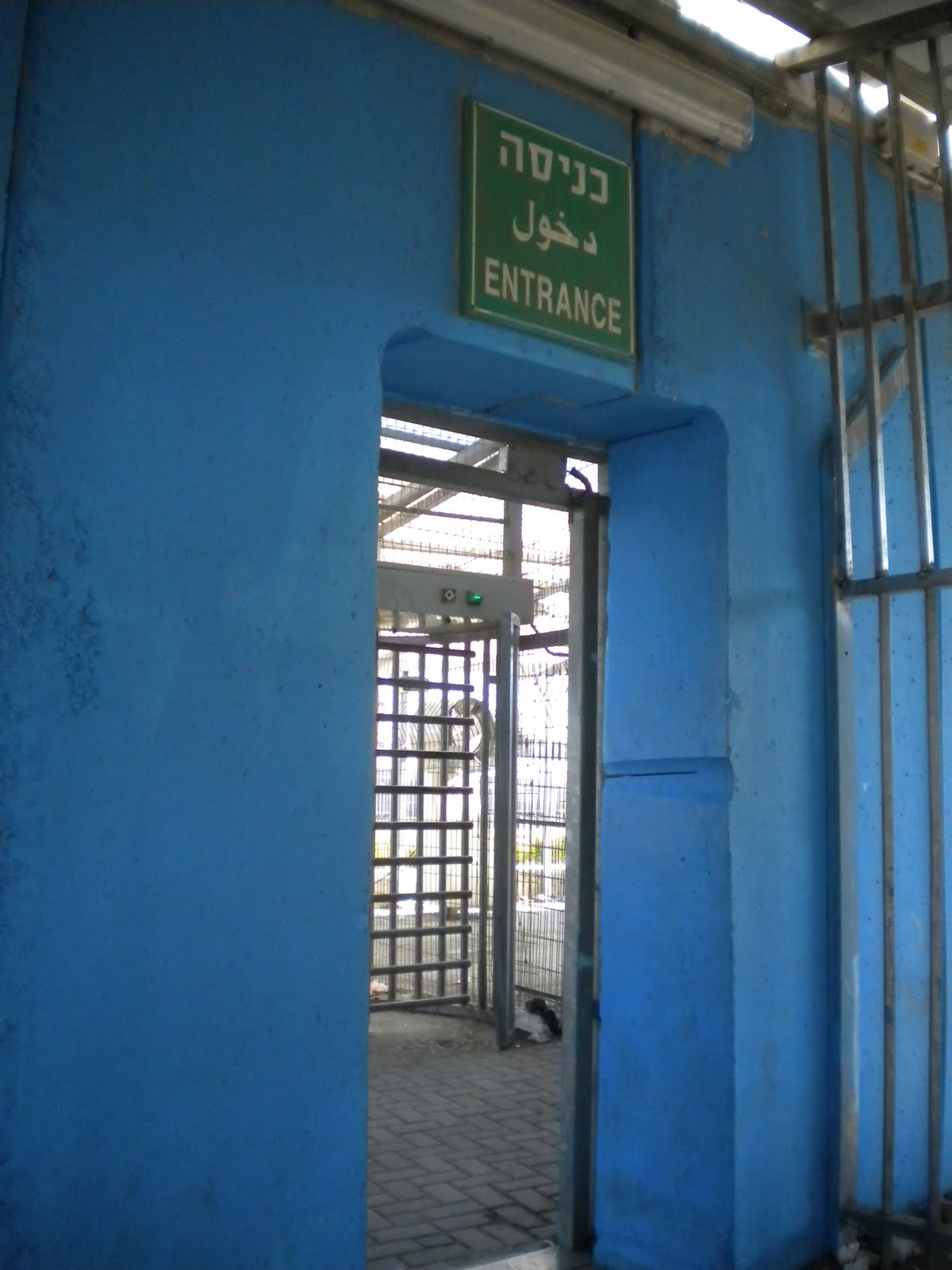

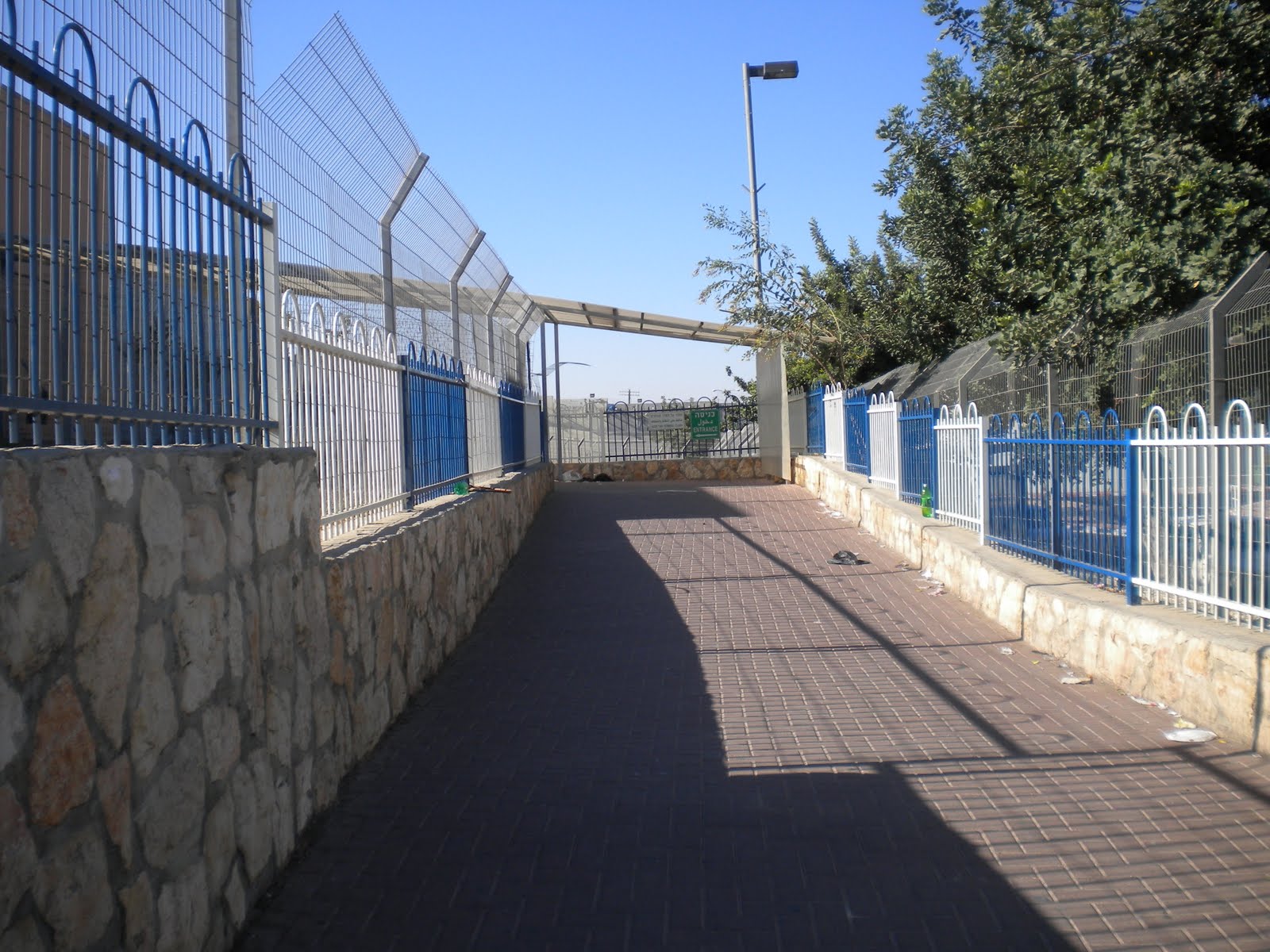
At the end of the outside ramp was an entrance to a small station that opened up on the other side of the separation wall. We went through a heavy turnstile, a metal detector, and then crossed the parking lot under the blazing sun just to end up at the beginning of another ramp. Tata was already slowing down, and people were beginning to pass us. One man was clearly a Muslim; he wore a long robe-like outfit with a keffiya on his head, and I thought of one of the previous times I went through the security maze and they held up a young boy in front of me because “he looked really Arab”, as his friend explained to me. I wondered if they would hold this man up, and how long we would have to wait if they did.


The view from the Jerusalem side of the wall. The more I become attached to the place and people where I am living, the more horrifying this wall is:


Down, down the ramp we went until we reached the actual security compound. We entered and upon turning the corner we were met by a line (not long) of people waiting to go through another turnstile. We were in line for about 2 minutes before Tata Huda decided to cut to the front. I actually thought she was kidding when she suggested it, but when she started making moves I realized she was really having a hard time standing for so long. Thankfully the people around us understood and they let us move to the front without a problem.


Tata Huda was in front of me, and people rotated through the turnstile until her turn came up. As she moved forward the spinning bars suddenly locked up; enough people had gone through, we would have to wait a couple minutes. Tata sighed, and then made a comment which I couldn’t understand but made everyone around us laugh. Sometimes the people here totally amaze me with their ability to laugh in the face of the most absurd and dehumanizing situations; for example, when the Sa’adeh family was visiting last week to talk about flights to America for the TOL Conference, they were beside themselves laughing, telling stories about airline security freaking out and delaying Palestinians because of stupid things like a small hole in one of their shoes, a minor detail in real life but a massive security threat worth emptying the entire airport over in the world of Israeli paranoia.


Tata Huda and I went through the turnstile into the metal detector room. In the building itself there are no soldiers walking around, everything is automated. I’m not really sure how it works, but there are LOTS of security cameras everywhere; it is rather unnerving (looking at one, Tata Huda leaned over to me at one point and whispered in Arabic, “The Jews are always watching”). You don’t find any soldiers until after the metal detector, down a couple halls and around a few corners. On the walls are posters advertising Israel as a vacation state; it is a disgusting mockery of every single person walking through there.


Near the end of the security building there was one last turnstile adjacent to a small room with an Israeli soldier, definitely younger than me, sitting at a desk. There was a line of people waiting to get their permits checked with a family up at the front with 3 little girls. A couple seconds after we got there, the father of the family started shouting at the soldier behind the glass. The soldier stared blankly back at him. After a minute, the father put his arms around the small girls and led them back in the opposite direction, and his wife followed. Tata later explained to Jiries that only 1 of the 3 daughters had a permit to go into Jerusalem, so the soldier turned them away, and the father shouted at him that he and the rest of the Israelis were all going to hell. The girls were no older than 5 or 6 years old, and they were visibly upset by what was happening. I heard their mom explaining to them that it wasn’t their fault that they couldn’t get the permits, and maybe they would have better luck next year.


Well, what could we do? It was a sad sight, seeing them walk away after all that trouble, but we were almost done and Tata was very tired. There was a fingerprint machine all the men were putting their hands in to have scanned. Tata’s turn came up and she fumbled for a second before pressing her permit against the glass so the soldier could see. He squinted at it, checking the details, typed some things into the computer for a couple minutes, and then motioned for her to pass and unlocked the turnstile with a button so that she could go through. I opened my passport, he smiled at me, and I went through in a second.




Shorok told me that one time when she had a permit to go to Jerusalem for girl scouts the solider at the checkpoint security made a kissy face and winked at her- she said it made her feel sick. Tata Huda and I walked down another hall then out the door where we met Jiries who had driven around. According to Israeli law, it is illegal for him to drive through that checkpoint with another Palestinian in his car, even if it is an 80 year old woman. “My poor mother,” Jiries lamented as Tata practically collapsed into the car. She leaned her head back against the seat, closed her eyes, and napped as we drove through Jerusalem to the church. Our day had barely begun.

Three Day Permit

Today is a Greek Orthodox holiday celebrating Virgin Mary’s ascension into heaven after her death. Every year on this holiday Christians in the West Bank apply for permits from the Israeli army to go into Jerusalem to visit the church where the tomb of Mary supposedly is, and the Israelis are generally more lenient about issuing permits. About a week ago Jiries brought Tata Huda’s permit request to the military headquarters where applications are handed in. Shortly after, we found out she had been accepted- and her permit was valid for THREE whole days! This was great news because Tata Huda, for reasons unbeknownst to us, is on some sort of Israeli blacklist that classifies who is a “manuah” (I’m not sure how to spell that), which is a Palestinian person who poses as a greater security risk than others and is usually denied any traveling permits. Why Tata Huda, an 80 year old woman, is on that list is a mystery to us.

Tata’s permit is valid for 3 days, so yesterday Jiries and I took her to the beach we go to often in Ashkelon, Israel, on the Mediterranean Sea. On Thursday night when I told her we were going the next day she was thrilled. In the morning she packed up her “modern” bikini and medicine, and then we were on our way. We brought some plastic chairs so it would be more comfortable for her to lounge, and a plethora of turkey sandwiches to hold us over. As we approached the checkpoint Jiries reminded us to let him do the talking. This checkpoint was simply a small cement room in the middle of the bypass road between lanes with a watchtower nearby. Even though there was no reason to be nervous I felt a twinge of uncertainty as the Tank rolled up next to three teenager soldiers, 1 girls and 2 guys, fully equipped with intimidating aviators and massive guns. It is always unnerving at the checkpoints, since you never know if they will make you pull off to the side to search your car or ask you a series of accusatory questions (sometimes they make small talk, but we have only had the car searched once). On this particular occasion, I hoped that they would not stop us or ask questions because I didn’t want Tata Huda to be bothered or scared at all. Thankfully, after a brief stare down, they motioned for us to go through.

As we drove along through the countryside, filled mostly with agricultural fields, I thought of all the changes Tata Huda has witnessed over the course of her life: the confiscation of land, the demolition of houses, the occupation, and so much more. We passed Beit Jebren, the empty land that was an Arab village until the Israelis completely destroyed it, leaving only a few broken stone building foundations left behind as a reminder of what was once there (no, they didn’t build anything over it). I have posted pictures of the village remnants before, but seeing the look on Tata Huda’s face as we drove past them gave everything new meaning. She told me when the Israelis razed the town many of the people fled to Beit Sahour, but when the village of Beit Jebreen still stood she visited it many times.


We arrived at the beach; it was crowded, but we found a spot in the shade. I fell asleep under the sun for most of the day. The waves were really rough and the undertow was strong, so the lifeguards restricted the swimming area to a tiny space that was soon filled with so many Israelis that you couldn’t even see the actual water. The water isn’t exactly clean; with every step you take plastic bags wrap around your ankles and legs, and large unidentifiable particles float on the surface. After writing a report for the PWLS on waste management and learning about how much waste is dumped into the sea (from Gaza), I was acutely aware of what I was most likely standing in. I guess sometimes ignorance is bliss. Nonetheless, I went in the water a bunch of times, especially to accompany Tata Huda. She loved it. She sat in the sand and let the waves crash over her, the whole time with a huge smile on her face.


At one point Tata Huda sat down in her chair and it flopped over backwards. I was leaning over the cooler getting a sandwich when I heard her yelp. I immediately went to help her, but when I saw her laughing, I started laughing too, then Jiries joined in and I had no choice but to take a picture.


We were there for a few hours before we decided to head home. Much to Tata Huda’s dismay (she won’t say it, but I can tell), I drove the entire hour and a half trip home, and by the time we got back in one piece her confidence in my driving abilities was definitely boosted. I am really glad we brought her, she seemed to love it.

Environmental Series Part II

Climate change

The consequences of climate change in Palestine are can be predicted based on a combination of both biophysical and sociopolitical vulnerabilities, and the area most susceptible is undoubtedly water resources. In terms of biophysical vulnerability, the impact of climate change on water resources is expected to result in a significant decrease of annual precipitation and temperature rise. Estimates of existing climate models predict that the mean sea level for the Mediterranean Sea will rise by 35cm by 2100, posing a serious threat to Gaza. In terms of sociopolitical vulnerabilities, the political situation in Palestine has resulted in several problems in regards to water, such as unequal distribution amongst inhabitants of the West Bank (with Israeli settlers diverting most of the water), restricted access to wells and building permits, and an overall water shortage. This, in addition to rapid demographic expansion and general restrictions on development from Israel, indicates that freshwater resources in Palestine in both the West Bank and Gaza are predicted to become even scarcer than they presently are.

The combination of the already existing human-induced water scarcity and a decrease in annual precipitation is expected to have devastating effects in the Occupied Territories, particularly because the situation now is already dire. The impact of this will be multiplied by a coinciding rise in temperature. Climate change forecasts for the eastern Mediterranean from high-resolution regional climate models give clear scientific evidence to the Intergovernmental Panel on Climate Change (IPCC) projections for the region. In its Fourth Assessment Report, the IPCC predicts that, for the southern and eastern Mediterranean, warming over the 21st century will be larger than global annual mean warming – between 2.2-5.1ÂșC according to an optimistic emissions scenario. Annual precipitation rates are deemed likely to fall in the eastern Mediterranean, decreasing 10% by 2020 and 20% by 2050, with an increased risk of summer drought. Given that they are inextricably tied to all other aspects of the Occupied Territories, the two elements of Palestinian society that are likely to be most affected by the impact of climate change are the agricultural and public health sectors.

These changes will have the most extreme impact on the agricultural sector of Palestine, which is an essential aspect of the country because of the livelihood opportunities it provides as well as food production for the local population. Increases in seasonal temperature variability, storminess and frequency of temperature extremes may endanger cold- and heat-sensitive crops. Greater rain intensities and resulting floods could potentially damage crops. Additional damage resulting from droughts is also expected to increase with the anticipated decrease in water availability, hotter temperatures and shorter winters. According to the Palestinian Ministry of Agriculture, more pests and pathogens will not only increase crop diseases but also their sensitivity to drought and loss of biodiversity may reduce the natural control of agricultural pests. Furthermore, a delayed growing season will cause Palestine to lose its advantage over countries in colder climates in early exports of flowers, fruits and vegetables.

Palestinian farmers both in the West Bank and Gaza will face challenges resulting from climate change, particularly the task of mitigating the anticipated decrease in water availability. Agricultural livelihoods, particularly within rural rain-fed farming communities, are always directly affected by rainfall and drought incidence. The farmers in Palestine, however, experience unique difficulties when it comes to obtaining water because of the current political restrictions imposed upon then by the occupation. Israel has installed problematic restrictions on movement and access to land, resources, and markets; this is exacerbated by a weak institutional framework and has resulted in an increase in farming production costs (including water supply) along with decreasing profits. Moreover, the construction of the separation barrier, the expanding presence of settlements and settler bypass roads, combined with the aforementioned imposition of restrictions on movement and access have endangered the watering and seasonal migration of herds. This has ultimately reduced grazing land and forced herders to purchase water from more distant filling points, which inevitably leads to higher transportation costs. Subsequently, the government and population has been forced to take into consideration alternative sources of food availability elsewhere in the world to compensate for domestic agricultural inefficiency.

In addition to the agricultural sector, public health will also be adversely affected by the predicted shortage of water availability due to the consequences of climate change. The lack of water is likely to result in an increase of health issues such as diarrhea, cholera, and dehydration. The risk of parasitic disease is also expected to increase with climate change because increased annual and seasonal variability, elevated mean temperature, and extreme weather events are all conducive to the spreading of existing vectors and establishment of new invasive ones. The longer and significantly hotter summers resulting from the delay of winter rains are likely to exacerbate the problem of cold-sensitive insects or other organisms that transmit pathogenic funguses, viruses, and bacteria causing of human diseases, such as Leishmaniasis, tick-borne diseases, and many others, which proliferate in summer.

Although public health and agricultural production in Palestine face the most serious problems, the repercussions of climate change are by no means limited to these sectors. Another alarming effect of global warming caused by climate change is the expected rise in sea level. This poses as a threat to Gaza to the extent that immediate attention to coastal management is crucial in order to regulate the effects of climate change as well as human activities. Coastal problems caused by humans include significant damage to offshore currents, sea bed fluctuations, seawater quality, as well as coastal erosion as the sand in coastal areas is mined in quarries for use in construction. All of these activities exacerbate the dilemma of the rising sea levels. This is already affecting the Palestinian fishing industry which is already witnessing shifts from rocky to muddy or sandy habitats.

In Palestine, energy consumption is increasing rapidly, reflecting the level of development and growth in population. The Palestinian Energy Authority (PEA) has not yet engaged in any climate change adaptation planning, so there are no policy statements on the potential energy impacts of climate change (for example, demands from increased water pumping needs). The Palestinians depend primarily on non-renewable sources of energy and imported rather than produced in the Palestinian territories. Electricity and fuel is almost completely imported from Israel. The main source of energy in the Gaza Strip and the West Bank is electricity, with a demand of about 600 MW of the electrical power for the coming 10 years. In many cases, underground storage tanks of fuel are not monitored or checked for leakage, posing a risk of contaminating soil and groundwater, as well as direct human health risks. To address this, the Palestinian Energy Authority has expressed strong interest in climate change mitigation and clean energy, notably the anticipated role for increased renewable sources and greater energy efficiency in an independent Palestinian energy system.

The situation in the West Bank and Gaza is already dire, especially in regards to the water shortage. The population is already experiencing the effects of climate change in the form of unusual weather patterns, such as exceptionally hot weather and less frequent rain. Clearly every aspect of Palestinian society will unavoidably be negatively affected by climate change, resulting in a general decrease in the resilience of livelihoods, so it is imperative for government and nongovernment organizations as well as individuals to take a proactive approach in order to derail some of the impending effects. This includes the organization of cohesive environmental information, and many other undertakings which are only possible with improved capacity building. Without such systematic analyses there will remain significant uncertainties regarding future climate change impacts.

There are major structural challenges internally facing the Palestinian National Authority (PNA) institutions that are necessary for effective climate adaptation policy-making. This can be attributed to political differences as well as resource and managerial weaknesses. Adaptive capacity at the national level in Palestine is directly compromised by the movement restrictions imposed by outside forces as well as insecure, insufficient water and land resources. As long as the regional political atmosphere remains stagnant, the Palestinians will continue to encounter difficulties when it comes to improving their living situation and preserving the land which is under their care. Climate change is a global crisis which transcends all geographical and political boundaries; the recognition of this is essential in order to effectively tackle the problem.


Sources:

"Climate Change, Water and the Policy Making Process in the Levant and North Africa"
Climate Change: Impacts, Adaptations and Policy‐Making Process: Palestine as a Case Study
http://www.aub.edu.lb/ifi/public_policy/climate_change/ifi_cc_texts/Documents/commissioned_papers/20090814cc_policy_levant_workshop/Palestine_country_study_Mimi.pdf
The Research and Policy Forum on Climate Change and Environment in the Arab World at the Issam Fares Institute for Public Policy and International Affairs, AUBAugust 4, 2009

Palestinian Integrated Rural Environmental Protection Plan: Volume I Current Status and Analysis

Mason, M., Mimi, Z. and Mark Zeitoun, M. (2009) Climate Change Adaptation Strategy
and Program of Action for the Palestinian National Authority: Climate Change Adaptation Strategy for the Occupied Palestinian Territory. The program was initiated by
Environmental Quality Authority (EQA) and financed by UNDP/PAPP.

Ministry of Agriculture, 2008. Rainfall Seasonal Report 2007/2008, Palestine.

Friday, August 27, 2010

Environmental Series Part I

The following is the "nature" section of the 5-part report I am writing for the Palestine Wildlife Society. There is an delegation coming from the European Union (I think from the EU) in September, and the reports I am writing will debrief them on the environmental problems in Palestine before they get here. The issues are divided into the topics of nature, waste, water, air, and climate change. The scope of these reports is limited, but I think they provide some valuable insight into an issue that is often overlooked because of the overarching political situation.

Palestinian Nature

The environmental deterioration in Palestine is particularly devastating because of the country’s unique natural characteristics. The Occupied Territories are located at the bio-geographic crossroads between the European, Asian and African continents, the Mediterranean and Red Sea, and numerous botanical zones. The territories are divided into 5 agro-ecological zones (the Jordan Valley, the Eastern Slopes, the Central Highlands the Semi-coastal Plain, and the Coastal Plain) which are all vastly different in climate. As a result of this distinctive situation, the region has considerably high biodiversity. The natural ecosystems of the area are exceptionally important because of their unique intrinsic value, their stabilizing effect on the environment, and direct support for human activities such as agriculture, animal husbandry, forestry, traditional and pharmaceutical health products, tourism, and many others.

There are about 51,000 living species in Palestine, constituting approximately 3% of global biodiversity. There are an estimated 30,904 animal species, consisting of 30,000 invertebrates, 427 birds, 297 fish, 92 mammals, 81 reptiles and 7 amphibians. Palestine is a particularly important location for birds because it is the home for approximately 427 species year-round and also a critical resting point for 274 species of migratory birds during the migration season. The country also hosts 2,750 species of plants from 138 families, including 149 endemic plants that do not exist in any other part of the world. As a historic center of crop diversity and cultivation, Palestine is the birthplace of many essential crops such as wheat, barley, vines, olives, onions, and pulses. The sustainability of agricultural production is inextricably tied to the status of a diverse natural biota and environmental balance.

Unfortunately, over time the Palestinian environment has suffered tremendous degradation because of unregulated domestic practices as well as indiscriminate abuse inflicted by Israel as the occupying power. Both the Palestinian and Israeli population have placed extensive pressure on the fragile ecosystem of the Occupied Territories that will indisputably have long-term effects. Natural ecosystems have been, and continue to be, destroyed to make way for agricultural, industrial, or housing developments; and growing population pressure has led to unsustainable utilization of natural resources and pollution of the environment. The Israeli Occupation (of the West Bank, East Jerusalem, and Gaza) amplifies existing environmental problems and clearly impedes efforts to improve them. Without the ability to regulate land use, the status of the environment cannot be properly monitored and environmental protection cannot be properly implemented.

The numerous Israeli violations against the Palestinian environment include, but are not limited to, the confiscation of land, the building of settlements and military bases, the construction of the separation barrier, and the destruction of infrastructure and massive areas of agricultural land. All of these practices have resulted in extensive land fragmentation and ecosystem destruction. Due to Israeli policies and military regulations, there has been an increased rate of destruction, loss of green areas, and reduced biodiversity in the Palestinian ecosystem. Forestation programs in the West Bank and Gaza that existed during the British Mandate and Jordanian Administration were stopped under the Israeli occupation.

Consequently, a 25% effective deforestation has taken place over 30 years, mainly due to the establishment of the Israeli military camps, settlements, and “nature reserves”. The effects of this are most apparent in places such as the Eastern Slopes zone, where 85% of the land has been confiscated by the Israeli Occupying Authorities for military purposes. This has led to severe overgrazing of the remaining area accessible to the Palestinian livestock herders. Overgrazing has resulted in the loss of the vegetation cover, soil erosion, intensive desertification, and caused changes in the topography and natural stream flow routings.

As in all other countries, natural habitat destruction in Palestine occurs as a result of a variety of reasons: unplanned urban expansion, overgrazing, over-exploitation, deforestation and unplanned forestry activities, desertification and drought, hunting, invasive alien species, pollution and contamination, and accidental mortality. However, there is also a close correlation between the rapid destruction of natural resources and the construction of the segregation wall. The fragmentation of the landscape and natural ecological corridors because of the wall has proven to disrupt migration patterns and genetic contiguity, therefore threatening the viability of populations. During the last 30 years, 370 species in Palestine have changed their status to become rare or very rare. There are 22 animals facing the threat of extinction, including 5 mammals, 5 species of Herpetofauna, and 12 species of birds. Furthermore, 56 Mediterranean fish species are also officially threatened. In terms of plant species, out of the 2,076 recorded 636 are listed as endangered, 90 of which are identified as very rare. This magnitude of pressure on the integrity of ecosystem and stability of natural resources significantly increases the risk of losing the Palestinian biodiversity.

At a United Nations meeting in 2004 about the impact of the wall’s construction, it was found that at that point, 6 years ago, more than 100,000 trees had been uprooted and 36,000 meters of irrigation works had been destroyed. A recent World Bank report states that around 170km2 of fertile agricultural land has been affected by the wall, amounting to over 10% of the total cultivated land of the West Bank with an average economic value of $38 million. This amounts to approximately 8% of annual Palestinian agricultural productivity. These statistics evidence the deterioration of Palestinian natural resources the past few decades and underscore the immediate attention that is required in order to preserve the fragile state of nature that still exists.

Natural resources in Palestine are also being slowly destroyed by the Israeli construction of many “industrial zone” settlements, of which there are at least 13, occupying an area of approximately 980 hectares in the West Bank. The Israelis have designated special locations on Palestinian land to dispose waste from these industrial zones. This includes the burial of materials such as zinc, nickel, radioactive substances and industrial waste. The discharged industrial wastewater produces pollution that generates grave dangers to the environment. The toxins pass through agricultural land, damaging planted fields, affecting water resources, accumulating in lagoons and ultimately spreading different diseases and causing major health and environmental hazards. In addition to the industrial zones, dangerous waste pollution is largely produced by the Israeli residential settlements illegally (by international law) established throughout the West Bank.

Currently, more than 207 Israeli settlements are scattered all over the West Bank, including East Jerusalem. These settlements accommodate more than 480,000 Israeli settlers. The settlements are reported to release large quantities of domestic, industrial and medical wastewater and solid waste into the surrounding Palestinian environment without any restrictions. More than 90% of the untreated domestic wastewater generated by the Israeli settlers living in the West Bank is discharged directly into nearby valleys and Palestinian lands, contaminating the environment and harming the natural wildlife. In 2005, the number of the uncontrolled solid waste dumping sites (Israeli and Palestinian) increased from 89 to 161 in the West Bank, none of which were subject to monitoring or control by the Palestinian Ministry of Health or other authorities. This can be attributed to the geographical discontinuity of land under Palestinian control, as well as the implementation of the Israeli segregation plans evidenced most clearly by the construction of the segregation wall, which has hindered the implementation of several centralized projects related to waste management.

Changes in plant and animal species composition and distribution are being caused by several factors. During the Israeli Occupation, several laws have been issued for the protection of natural resources. However, those laws implemented in the Occupied Territories gave Israel full control over Palestinian natural resources, mainly land for security reasons, as Israel claims. The Palestinian state does not have sovereignty over its own natural resources, and in light of the ongoing political conflict nature has been placed low on the list of the state’s priorities. The Environmental Quality Authority is responsible for licensing sites, environmental monitoring, provision of expertise and ensuring environmental protection; however, the Israeli imposition of accessible and inaccessible areas (Areas A, B, and C) for Palestinians has made the management and conservation of natural resources a very difficult job. This major external obstacle is compounded by already existing problems which stand in the way of prioritizing the protection of natural resources and open space landscapes. These problems include the country’s limited size, lack of momentum when it comes to development, population growth rate, and other reasons.

The unique Palestinian natural biodiversity is undoubtedly at stake, for a variety of reasons. In addition to the drastic changes imposed by the Israeli occupation, including the settlements and the construction of the segregation wall, biodiversity is also threatened by the lack of law enforcement and policies concerning better environmental management and conservation. Because there is a lack of sufficient documentation concerning environmental losses in Palestine, it is difficult to quantify exactly how much harm has been done. The statistics that are available, however, indicate a grave situation that must be addressed in the near future before more irreversible damage occurs. The current amount of pressure on the already fragile ecosystem compromises the livelihood of its inhabitants as well as the historical, environmental, cultural, and economical values of Palestinian biodiversity.


Sources:

Assaf, Karen. “Water as a Human Right: the understanding of water in Palestine”, Arab Scientific Institute for Research and Transfer of Technology (ASIR), Palestine. Excerpt from the book Water As a human right: the understanding of water in the Arab countries of the Middle East- a four country analysis. Written by Karen Assaf, Bayoumi Attia, Ali Darwish, Batir Wardam, and Simone Kiawitter.

Palestinian Integrated Rural Environmental Protection Plan: Volume I Current Status and Analysis. Palestinian National Authority Environment Quality Authority, December 2003.

Isaac, Jad. “Israeli Violations Against the Palestinian Environment” Cornerstone: A Quarterly Publication by Sabeel Ecumenical Liberation Theology Center. Issue 45, Summer 2007. Accessed August 3, 2010.

“Status of the Environment in the Occupied Palestinian Territory.” Applied Research Institute- Jerusalem (ARIJ), 2007.

Wednesday, August 25, 2010

Check out this link

Before I write anything else, I want to share a link that just distracted me for at least an hour and a half... for those of you who don't know about her, Anna Baltzer is a Jewish American woman striving towards peace in the Middle East by working with the International Women's Peace Service and documenting human rights abuses in the Palestinian Territories. I have read her book, Witness in Palestine, and been on her website (www.annainthemiddleeast.com), but I didn't know (until my facebook newsfeed informed me) that she also has a blog- and it looks just like mine! Hers was established way before mine and I had no idea about it until just now. I highly recommend it; if you like my fun cultural anecdotes but want to read about some very serious, heart-wrenching but immeasurably important experiences, look into her blog. It is absolutely fascinating.

www.annainpalestine.blogspot.com

I did some fun stuff the last few days; I visited the Church of the Nativity with a few really nice girls I am friends with now (Jiries' relatives), we walked around the church and also went to the Milk Grotto, which is where Mary supposedly stopped to feed Jesus during the flight to Egypt. Jiries says its a tourist trap set up by the Franciscan Church though. After I went to their house with them (they are the daughters of Jiries' sister Hanan's daughter Lana) and we hung out, ate a huge lunch, and played card games. Lana has 5 kids and the two older girls I was with during the day were Natalie and Marian as well as Hanan's other daughter Nawal's daughter Lumha (spelled right?). We had a great time. I would have taken more pictures but my camera died.


A few nights ago Jiries and I met with the Sa'adeh family- they are speaking at the Tree of Life Conference in November. Najwa and George, the parents, came over with their daughter Marian. Long story very short: a few years ago while they were driving through a checkpoint the Israelis opened fire at their car, killing their youngest daughter and wounding all of them. The Israelis never apologized and since then, instead of seeking revenge the family has sought means to achieve peace. Marian, their 23 year old daughter, is VERY active and interesting. Jane, Jiries' niece who is also participating in the conference, came by too. We all talked, took pictures, and compiled short biographies for conference advertising material. Everyone was REALLY interesting! It is going to be a fantastic conference. Sometime in September I will post an entry that is all about the conference and its participants.

Other than that, I have been working at the Palestine Wildlife Society each morning for the past few days. Jiries and I have gone shopping and to the beach, in Ashkelon, Israel. Today we stayed there until the sunset- it was really beautiful. Every day has been really fun and exhausting, but I love it.

Monday, August 23, 2010

Meeting new people

Next to the beach:

It is still really hot here. So hot, Jiries and I decided to risk going to the beach on Saturday because we couldn't stand the heat here anymore. I say 'risk' because Saturday is the holy day of rest for the Jewish people, so no one works, and what's a better thing to do on your day off than go to the beach? We went to Ashkelon, which is about 1 kilometer from Gaza (a beach we have been to several times before), and it wasn't too crowded, but there were definitely a lot more people there than normal. There are a few tent-like structures that are set up on the beach for shade, and we set up our beach stuff under one that already had a few people under it. There were two older girls (Mariam and Rebecca), one younger girl (I can't remember her name, actually it was impossible to pronounce), and two guys (Dave and Danny, more showed up eventually), all about my age or a little younger. They were of African descent and right away Jiries noticed that they weren't speaking Hebrew.


Eventually a conversation evolved when they asked me where I was from. One of the guys spoke English pretty well, Dave, but sometimes he had a hard time expressing himself. He told me that they were speaking their native language from Ethiopia, which is where most of them were born, however a few of them were born in Israel. Dave told me that his parents left Ethiopia to go to Israel in 1991, and when I asked why he said it was because the Bible says the Jewish people belong in Israel. Later when I spoke with another young guy, he said his parents left because the Jewish people were treated badly by the Muslims in Ethiopia. Once they got to Israel, they learned Hebrew and started a new life.

Dave is 21 years old, just like me, and he is in the IDF, the Israeli Defense Force, for his 3rd year. Before the military he worked in a circus as an acrobat, but all Israeli men have to serve a mandatory 3 years in the IDF and women serve 2. Dave told me his miltiary unit was sent to patrol the border with Egypt, and he really didn't like his job so he switched to become a chef (for the IDF) instead. He admitted he doesn't like being in the military, but he said Israel is a small country and everyone has to be in the IDF, so there is no choice. He said when he was on border patrol he got used to listening to the sound of bombs every day and it no longer scared him, but he still didn't like it.


The Ethiopian Israelis were pretty funny; except for Dave, the rest of them only knew a few choice words that they informed me, and I could tell, were from rap songs they heard on MTV. I won't write what they said here, because its definitely not appropriate, but my jaw pretty much dropped when I heard the things they called each other in English. They saw my reaction and howled with laughter. They loved asking me about New York City and the parties at American universities that they see in the movies and they mentioned that the parties in Tel Aviv are great too, just in case I was wondering. I asked Dave about Jaffa, the Arab city adjacent to Tel Aviv, and he said that no, Jaffa was no good. Its all terrorists. I asked why. He said you know, lots of Muslims. I asked him if he had been to Bethlehem, where it is mostly Christians. He said No, it is all terrorists there too. The Christians are ok though. But still terrorists in Bethlehem.

The conversation topic switched abruptly so I didn't have the chance to press him for more, plus we were all having fun and I didn't want to ruin the mood. The girls were smoking hookah and the guys were drinking beer, and even though there was a major langage barrier we were still sharing a lot of laughs. We discovered Rebecca knew some Spanish, so her and Jiries talked for a bit because he speaks fluent Spanish. Danny, one of the guys, put on Rebecca's skirt and wore it the whole day. The girls nearly died laughing. We went swimming together and had splash fights and buried Dave in the sand. Mariam was especially nice, but she spoke very little English so we didn't talk much, and instead we pointed and laughed and swam around in the sea.


After a while they left but Jiries and I stayed until the sun went down. The beach still had lots of people on it, and there were many people swimming even after the sun set.